
Expert Tree Services in Parker Colorado
Parker has gone from a small ranching community to one of the largest towns in Douglas County in just a couple of decades, and the trees tell that story clearly. Drive through the older neighborhoods near Mainstreet and you'll find mature cottonwoods, elms, and ponderosas that have been here for generations. Head into the subdivisions built since the early 2000s (Stonegate, The Pinery, Idyllwilde, Canterberry Crossing) and you'll see rows of builder-planted trees, many of them already showing signs of stress from Parker's challenging soil and climate.
That contrast between old Parker and new Parker creates two very different sets of tree care challenges, and addressing them requires arborists who understand both. At Tall Timbers Tree & Shrub Service, we've been caring for trees across Parker and Douglas County for over 25 years. Our ISA Certified Arborists know this community: the soil conditions off Parker Road versus Stroh Ranch, the wind exposure properties face along the ridge near Hess Road, the specific pest pressures that cycle through Cherry Creek and Sulphur Gulch corridors every summer. We bring that local knowledge to every job.
Whether you're managing a mature landscape on an older Parker lot, fighting iron chlorosis on builder-planted maples in Stonegate, or creating defensible space on a larger Pinery property, we have the expertise and equipment to handle it right.
Tree Care Services Throughout Parker, Colorado
Tree Pruning & Trimming for Parker's Varied Landscapes
Pruning needs in Parker vary dramatically depending on where you live and what's growing on your property. The approach that works for a 60-year-old cottonwood on a half-acre lot near downtown Parker is completely different from what a five-year-old autumn blaze maple in Canterberry Crossing needs.
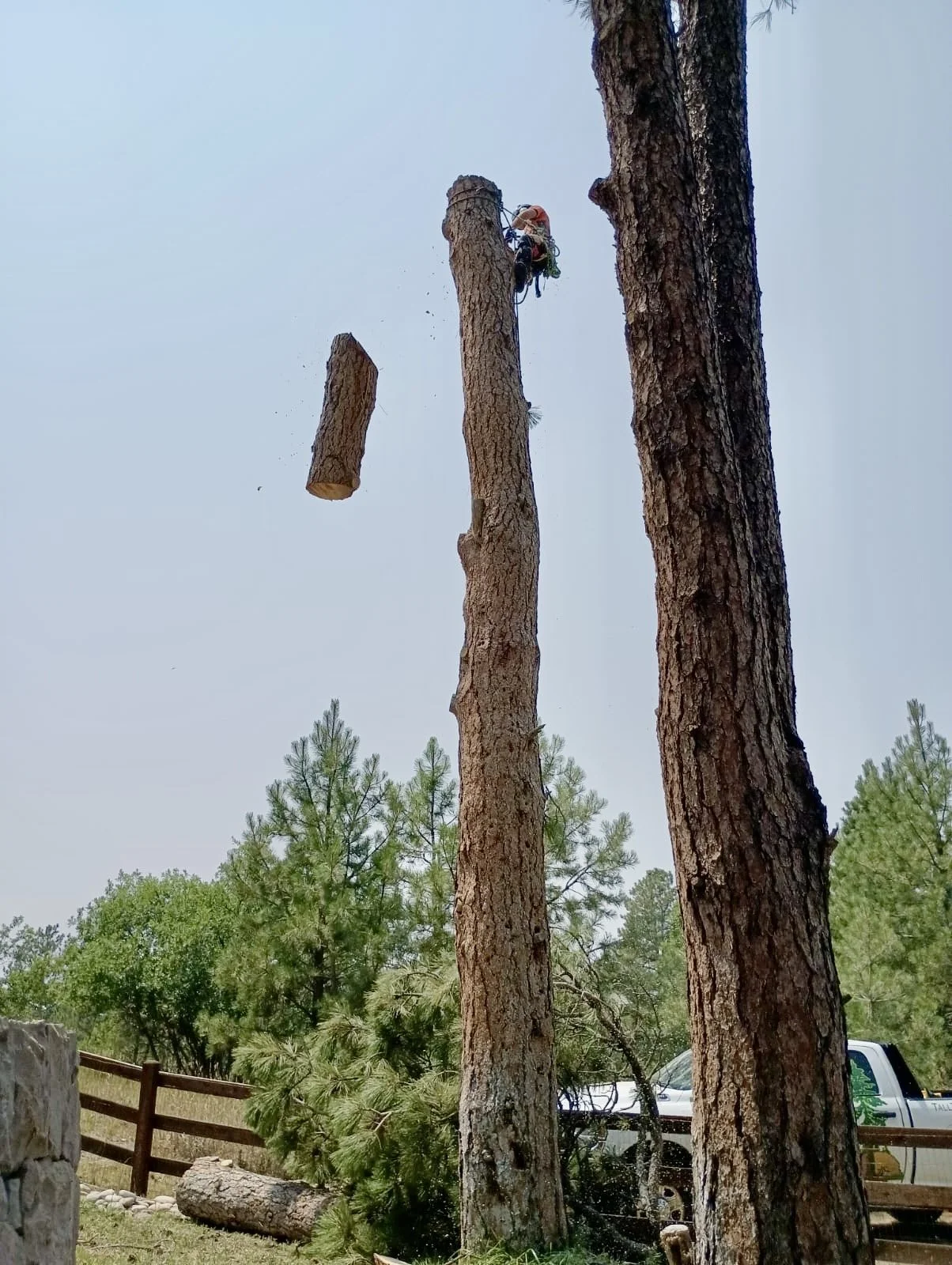
For Parker's mature trees (the big cottonwoods, elms, and ponderosas) structural pruning is critical. Cottonwoods in particular have notoriously brittle wood, and Parker's heavy spring snowstorms exploit every weak branch union. We regularly see major cottonwood failures across Parker after April and May storms, and most of that damage was preventable with proper pruning. Our approach focuses on reducing weight on overextended limbs, removing co-dominant leaders, and managing canopy density so snow doesn't accumulate faster than branches can handle.
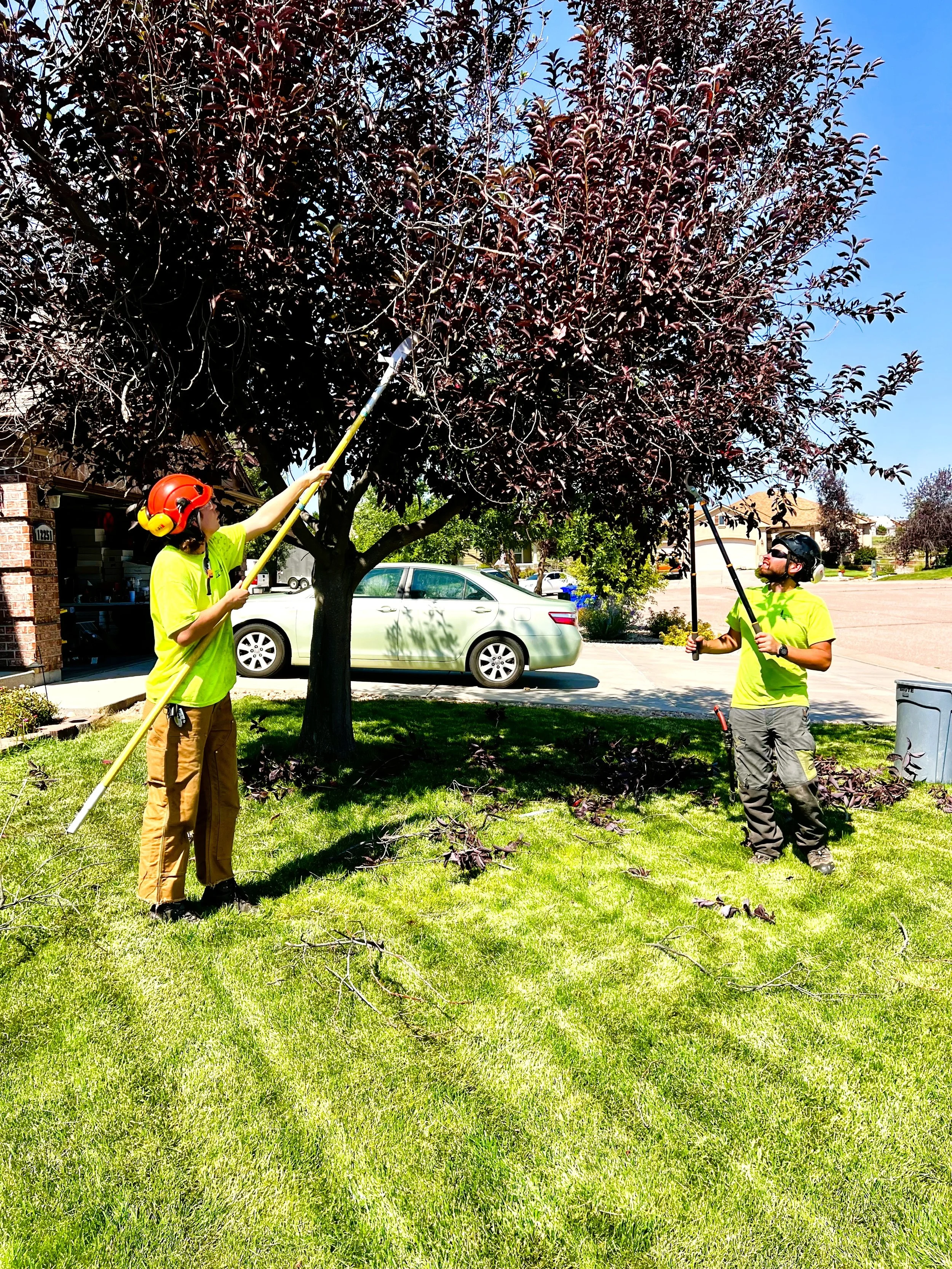
For younger trees in Parker's newer neighborhoods, formative pruning is the priority, and it's the most neglected aspect of tree care we see. A $250 formative pruning visit today can prevent a $2,000 emergency removal in eight years.
Tree Removal Across Parker's Diverse Properties
Parker's property types range from compact suburban lots in Motsenbocker to multi-acre parcels in The Pinery and Pradera, and tree removal looks different on each one.
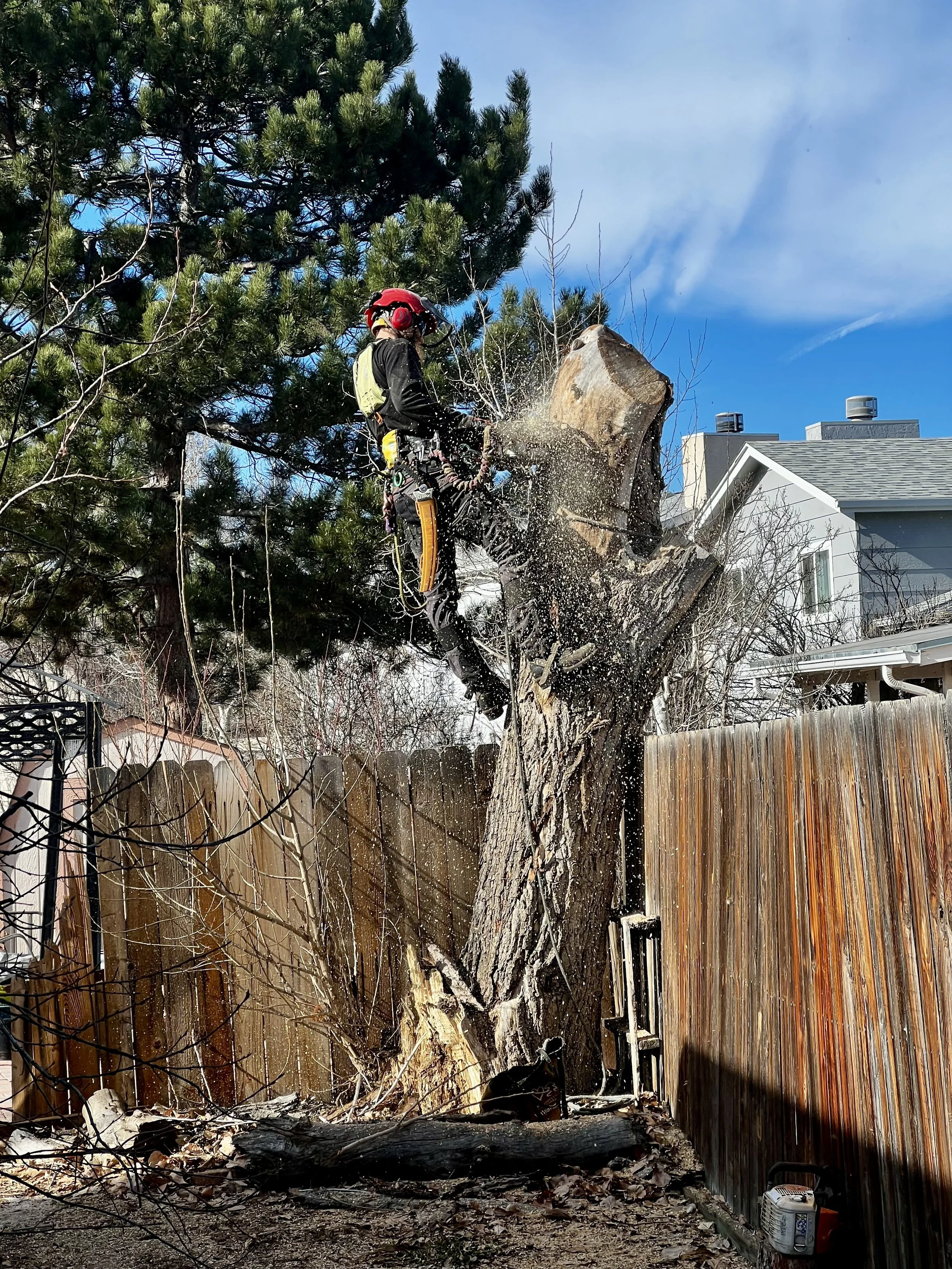
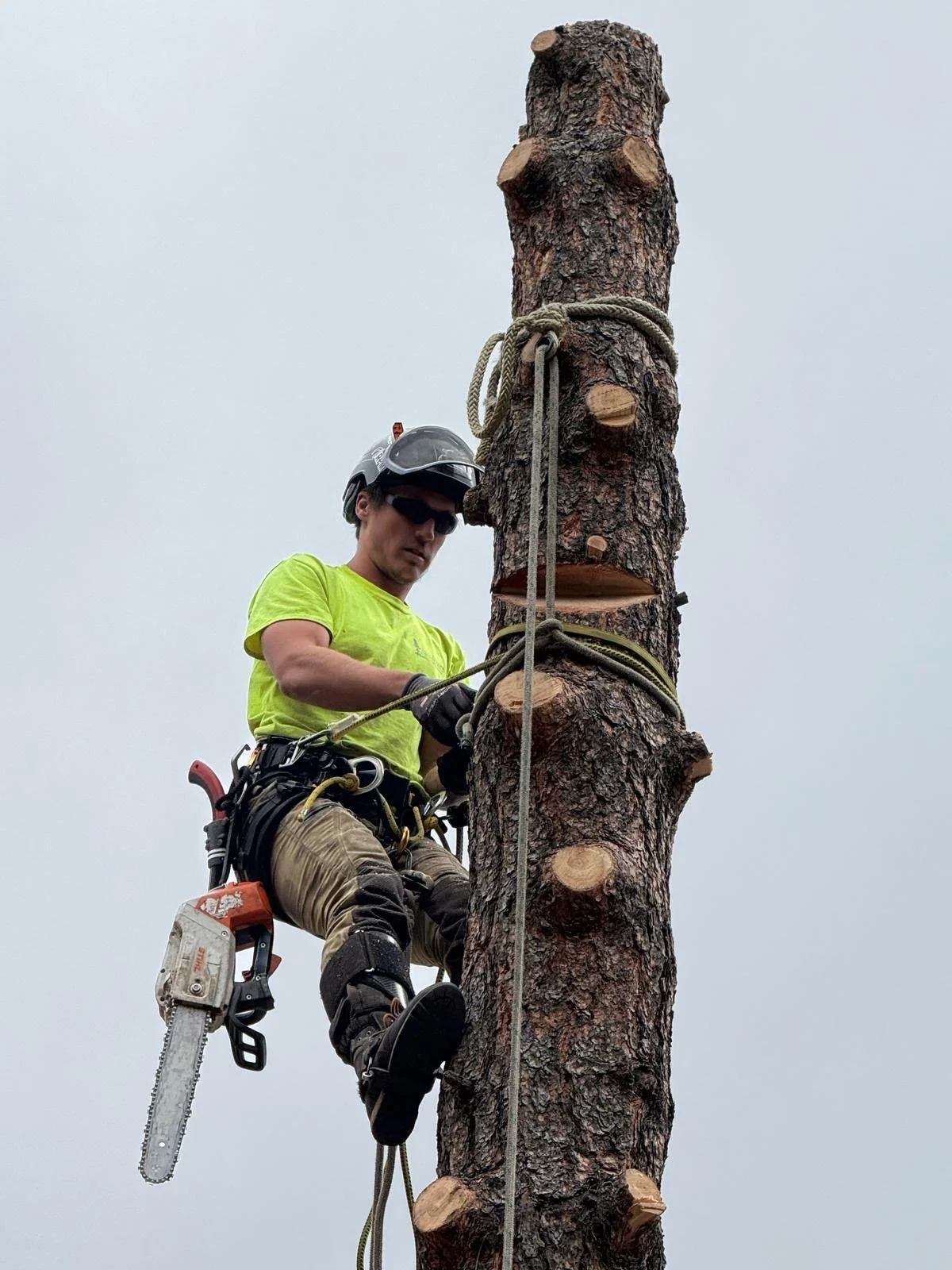
In the tighter neighborhoods, removal requires precision planning: protecting fences, nearby trees, irrigation systems, and structures while working in limited space. We've removed trees from backyards in Stonegate and Idyllwilde where the only access was through a side gate, and we've taken down massive cottonwoods in older Parker neighborhoods where root systems had lifted sidewalks and foundations.
On larger Pinery and Pradera properties, removals often involve multiple trees: pine beetle kill, dead or declining trees from drought stress, or strategic removals for fire mitigation. These projects require efficient operations across bigger areas and equipment that can handle the rocky terrain.
Regardless of property size, we will handle the entire process: safe felling or technical rigging, full cleanup, and stump grinding.
Stump Grinding in Parker's Clay Soil
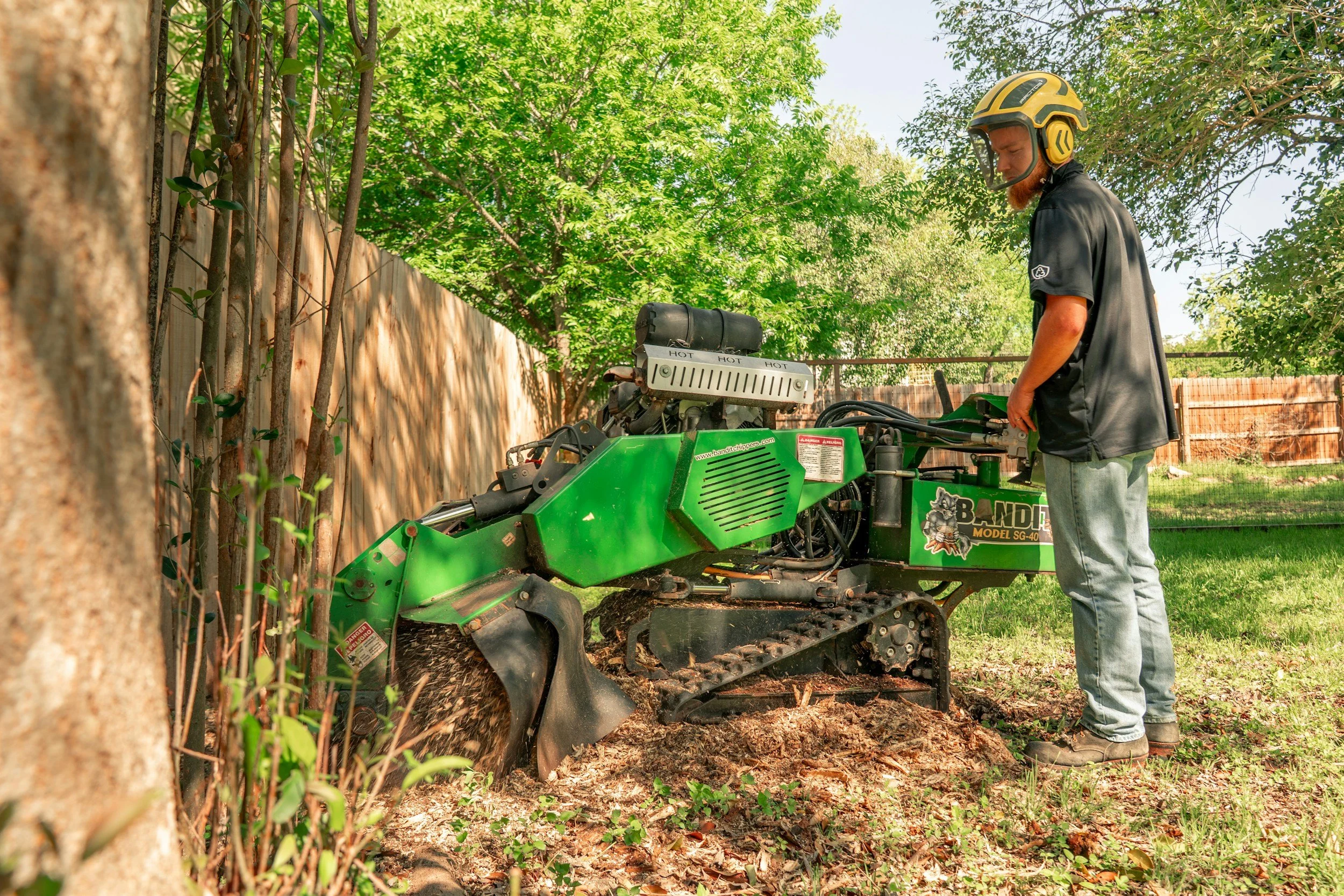
Parker's soil is predominantly heavy, expansive clay, the kind that swells when wet and cracks when dry. This makes stump grinding more demanding than in looser soils, but it also means leaving stumps in place creates ongoing problems. Decaying stumps in clay soil become water traps that attract pests, promote fungal growth, and can even contribute to foundation moisture issues if they're close to structures.
Our grinding equipment is built for these conditions. We grind below grade and clean up thoroughly, leaving the area ready for whatever you have planned, whether that's new plantings, sod, or landscape features.
Pest Control & Disease Management
Parker's tree pest landscape is shaped by its mix of native and planted species, its elevation, and its position along the Cherry Creek corridor, which acts as a natural pathway for pest migration.
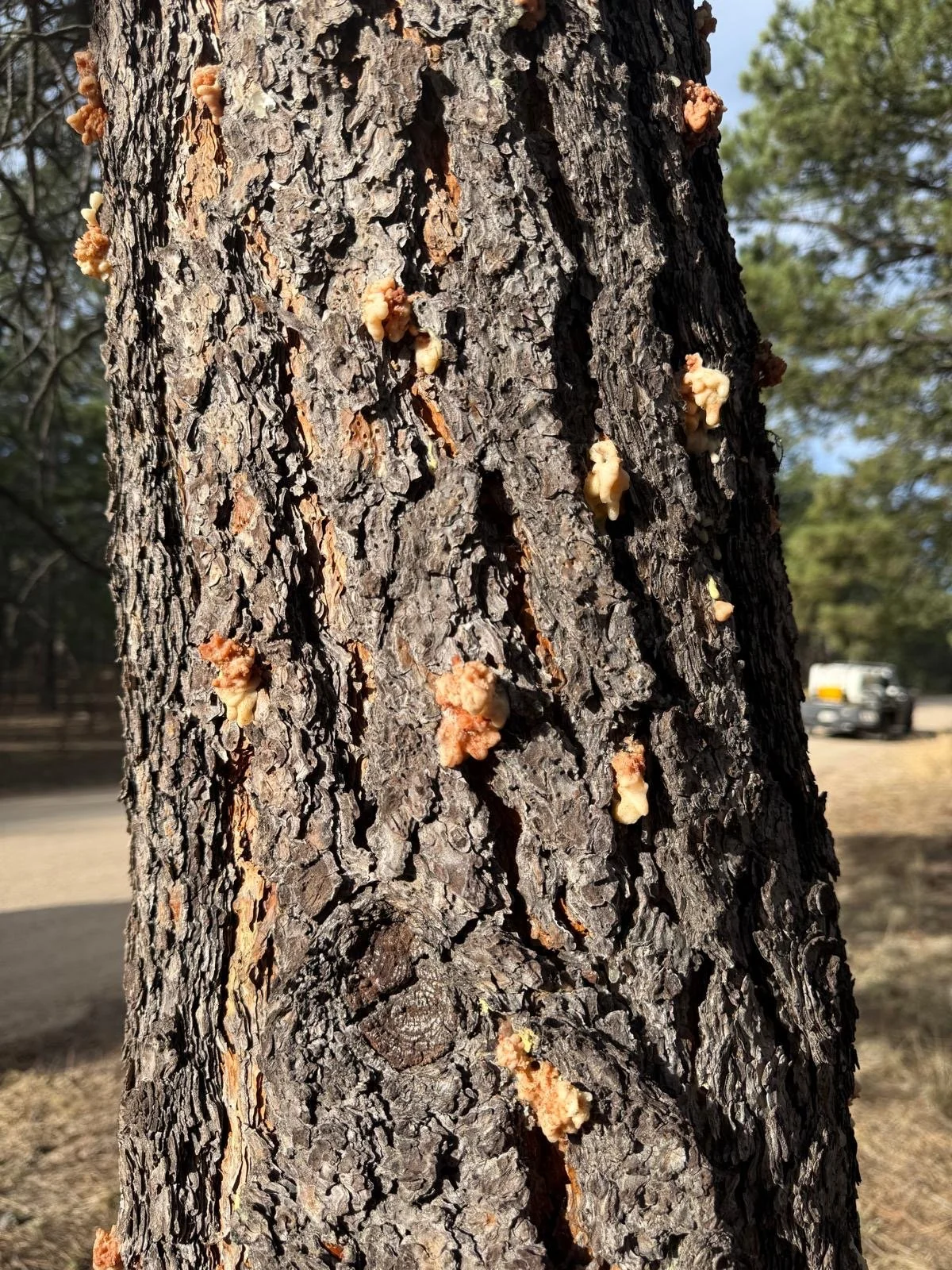
The threats we manage most frequently in Parker include Mountain Pine Beetles and Ips beetles attacking ponderosa and Austrian pines (especially in The Pinery, where dense pine stands create ideal beetle habitat), aphids colonizing ash and honey locust trees every summer, Emerald Ash Borer (an emerging threat that every ash tree owner in Parker needs to be aware of), Fire Blight devastating ornamental pear and crabapple trees in newer neighborhoods, and Cytospora canker steadily killing blue spruces across the community.
Our approach combines monitoring, prevention, and targeted treatment. We offer preventive spraying programs timed to Parker's specific pest cycles, trunk injections for systemic protection, and ongoing monitoring to catch new infestations before they spread. For Parker properties with significant pine stands, particularly in The Pinery, regular beetle inspections are essential, not optional.
Our Scout Program program was designed to give our clients piece of mind with monthly inspections of their trees and shrubs trying to mitigate pest infestations before they are devestions.
Deep Root Fertilization for Parker’s Trees
Between the alkaline pH, heavy clay composition, low organic matter, and construction compaction in newer developments, Parker's soil is generally hostile to tree roots. Trees that would thrive in amended garden soil barely survive in the native clay that underlies most Parker properties.
Deep root feeding addresses this directly by injecting nutrients, beneficial biology, and soil-conditioning agents into the active root zone, below the compacted surface layer where roots actually live. For Parker trees, this treatment makes a measurable difference in growth, color, and overall vigor.
We recommend deep root feeding for virtually every tree in Parker, but it's especially critical for trees showing signs of chlorosis or stress, recently planted trees establishing in construction fill, mature trees in declining health, and any tree you're trying to protect from pest pressure. Healthy trees resist beetles and borers far better than stressed ones.

Wildfire Mitigation for Parker’s Fire Prone Areas
Wildfires can happen almost anywhere, and no homeowner can predict when or where the next fire may start or how quickly it could spread. In Parker, especially in areas like The Pinery, Pradera, and neighborhoods bordering open space, dense pine stands, Gambel oak thickets, native grasses, and unmanaged vegetation can create conditions where fire moves rapidly toward homes and structures. Being proactive with fire mitigation and defensible space is one of the best ways to help protect your property, your family, and your community
.Our fire mitigation work follows Douglas County recommendations and focuses on creating effective defensible space while preserving the natural beauty that makes these properties desirable in the first place. We selectively thin overcrowded tree stands, raise canopy heights to reduce ladder fuels, remove dead or stressed vegetation, and manage aggressive scrub oak and brush growth common throughout Parker’s open space corridors.
For homeowners in The Pinery especially, mitigation is not just about protecting one property, it’s about reducing risk across the entire neighborhood. Dense, overgrown pine stands can create continuous fuel pathways between homes. We work with individual homeowners, HOAs, and communities throughout Parker to develop coordinated mitigation strategies that improve safety while maintaining the character of the landscape.

Emergency Tree Services In Parker
Parker sits directly in Colorado’s spring storm corridor, where heavy, wet snowstorms in March, April, and May regularly cause significant tree damage. Cottonwoods split under excess weight, Bradford pears are prone to failure due to weak branch structure, and improperly staked young trees often bend, crack, or snap during late-season storms.
When severe weather hits, our crews respond quickly to emergency tree service calls throughout Parker to clear hazardous limbs, remove fallen trees, protect structures, and restore safe access to properties. We also handle damage caused by summer windstorms and ice events that place excessive stress on branches and mature tree canopies.
Commercial & Residential Tree Services
Parker has a lot of HOAs, and we work with many of them. HOA tree management in Parker goes beyond basic trimming. It includes inspections for hazard trees, long-term species planning (especially replacing declining species with better-adapted alternatives), pest monitoring, and coordinating major projects like fire mitigation across common areas.
We also serve Parker's commercial properties along Parker Road and Mainstreet, municipal landscapes, and individual homeowners throughout the community. From a single tree health consultation to a comprehensive multi-year management plan, we scale our services to match your needs.
Why Parker Property Owners Choose Tall Timbers

✔ 25+ Years of Experience – We've served Parker since before most of its current neighborhoods existed. We know how this community's trees have evolved and what they need.
✔ ISA Certified Arborists – Professional knowledge and industry-best practices for Parker's tree species
✔ Fully Licensed & Insured – Complete protection for your property, your neighbors, and our crews.
✔ Eco-Friendly & Sustainable Practices – Environmentally responsible tree care for Parker's ecosystem
✔ Free Estimates & Competitive Pricing – We’ll give you an honest assessment of whether a tree can realistically be saved or if replacement is the better long-term investment. Our goal is not to push unnecessary treatments or removals. We believe in preserving healthy trees whenever possible and removing trees only when safety, decline, or structural issues make it the right decision.
Ready for Expert Parker Tree Care?
If you need tree care that truly understands Parker, the soil, the pests, the weather patterns, and the unique challenges each neighborhood faces, we're ready to help. We provide honest assessments and real solutions, not generic tree service.
Call us at: (720) 799-7858 or click below to request your free estimate online. We'll schedule a convenient time to walk your property and develop a plan that addresses your specific trees and landscape.
Serving Parker, The Pinery, Stonegate, Pradera, and all of Douglas County with professional tree care services since 2000. Licensed, insured, and committed to keeping Parker's trees healthy and beautiful.
Frequently Asked Questions About Parker Tree Care
-
EAB hasn't been confirmed in Douglas County yet, but it's right on Parker's doorstep. In 2025, it was confirmed in Aurora, Denver, Centennial, and over 20 other Front Range cities. The Colorado State Forest Service now advises all Front Range residents to assume EAB is in their area and expects it to reach Castle Rock and Colorado Springs within five years. Parker homeowners with ash trees should start a treatment program now. Trees within 15 miles of a known infestation are at risk, and Parker is well within that range. Trunk injections are most effective when applied before the beetle arrives. Once you see crown dieback or D-shaped exit holes, it's usually too late. Call us for a free ash tree assessment so you can make an informed decision before EAB reaches Douglas County.
-
Most trees in Parker benefit from pruning during late fall through early spring while they are dormant. However, hazardous limbs, storm damage, and certain species may require attention at other times of year. Proper timing helps reduce stress, disease risk, and unnecessary sap loss.
-
Even though Parker is not a mountain community, wildfire risk still exists, especially near open space, native grasslands, and heavily wooded neighborhoods like The Pinery and Pradera. Fire mitigation helps reduce fuel sources around your property and can slow the spread of fire toward structures.
-
Not necessarily. Many mature trees can safely coexist near homes when properly maintained. The key factors are tree species, structural condition, root health, and proximity to the structure. A professional inspection can determine whether pruning, monitoring, or removal is the best option.